Introduction
Why does process serving always take longer in Long Beach than in San Diego?
It’s the question we hear most often from attorneys handling cases across Southern California. The answer isn’t about server quality or competence. Los Angeles County processes over 1.5 million cases annually across 88 cities, while San Diego County handles roughly 200,000 filings across 18 cities. That volume difference affects everything from court processing times to how long servers spend stuck in traffic between addresses.
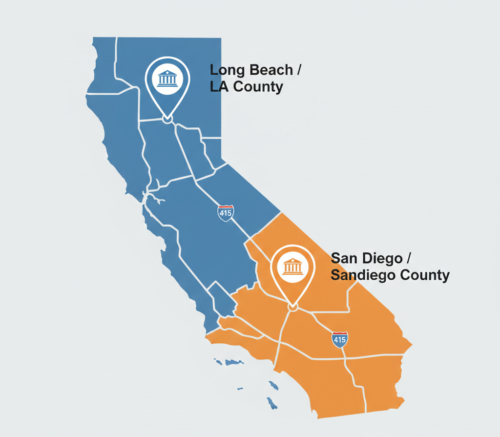
If you’re an attorney working across Southern California, the city where you need papers served affects more than just mileage. Long Beach sits inside the Los Angeles County Superior Court system, the largest trial court in the country, while San Diego runs its own county court with a smaller caseload and completely different local rules. That single distinction ripples through everything: filing fees, affidavit formatting, service timelines, and whether your proof of service gets accepted without pushback.
This article breaks down the practical differences between process serving in Long Beach and San Diego. If you handle cases in both cities or need to decide where to direct service, the details below will save you time, money, and frustration at the clerk’s window.
How the Court Systems Differ
Los Angeles County and Long Beach
Long Beach falls under the Los Angeles County Superior Court, a system that processes more than 1.5 million cases per year across 88 cities and large stretches of unincorporated land. The sheer volume means longer processing queues, stricter electronic filing protocols, and local rules that catch attorneys accustomed to smaller counties.
Local Rule 2.3 governs service of process, and electronic filing has been mandatory for most civil matters since 2019. A process server in Long Beach needs to know these rules because errors that might get overlooked in a quieter court can stall a case here.
San Diego County
San Diego County Superior Court handles roughly 200,000 filings per year, covering 18 cities and surrounding unincorporated areas. The system is large by most standards, but far more manageable than Los Angeles.
Local Rule 1.4.1 addresses service of process requirements, and the county’s eFiling portal has its own formatting standards. Process servers in San Diego typically encounter shorter turnaround times on court acceptance and fewer administrative bottlenecks than their counterparts in LA County.
Both counties require compliance with the California Code of Civil Procedure, so the statutory foundation is the same. The operational reality, however, differs significantly.
Ranworks has served documents in both jurisdictions since 2002 and maintains licensed, GPS-tracked servers throughout California that understand county-level nuances.
Geographic and Population Differences That Affect Service
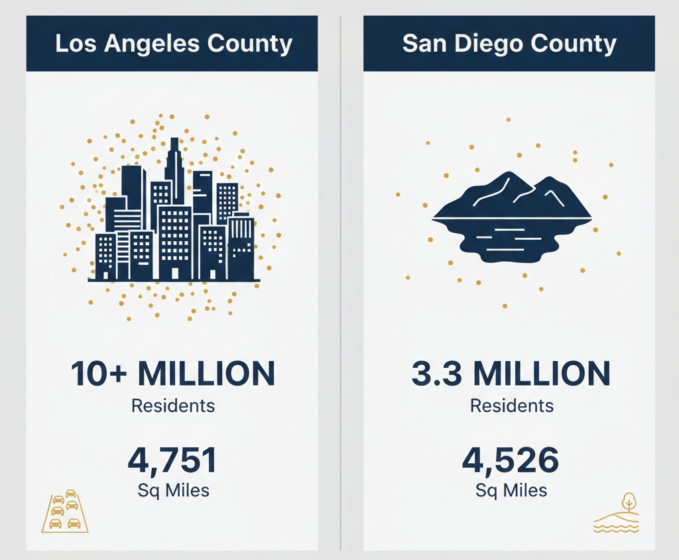
Los Angeles County covers about 4,751 square miles with more than 10 million residents. San Diego County is nearly the same size at 4,526 square miles, but holds around 3.3 million people. That population density gap matters for process servers in ways that don’t show up on a quote sheet.
In Long Beach and the wider LA basin, a server may spend 45 minutes stuck in traffic between two addresses that are only eight miles apart. Gated apartment complexes, high-rise buildings, and commercial properties with strict visitor policies add time to every attempt.
In San Diego, traffic congestion exists but rarely reaches the same intensity, and many residential areas offer more straightforward access. East County and border areas present their own challenges, but the core metro area is generally easier to navigate.
Affidavit Filing and Documentation Standards
California Code of Civil Procedure Section 1013a sets the baseline for proof of service statewide, but each county adds its own layer of expectations.
Los Angeles County Requirements
Electronic filing is required for most civil cases. The court’s Case Management System specifies formatting down to 12-point Times New Roman and standardized margins.
Key Details:
- Filing fees: $3.00 to $6.00 per document
- Proof of service deadline: Generally, 60 days from completing service
- Process server registration: $40 per year renewal with the county clerk’s office
- Strict formatting requirements for electronic submissions
San Diego County Requirements
San Diego County accepts electronic filings through its own portal but leans more heavily on standardized Proof of Service forms.
Key Details:
- Filing fees: $2.00 to $4.00 per electronic submission (lower than LA County)
- Proof of service deadline: Often 30 days (tighter than LA County’s 60 days)
- Strong preference for GPS tracking data and photographic evidence
- More flexible formatting compared to LA County
This is where documentation quality matters. San Diego courts have shown increasing preference for GPS tracking data and photographic evidence as part of service documentation.
Every service attempt through Ranworks includes GPS coordinates, timestamps, and a detailed affidavit that meets both county standards. Learn more about how this works on the Ranworks process serving page.
Cost and Timing Comparison
| Service Type | Long Beach (LA County) | San Diego |
| Standard Service | $75 – $150 | $65 – $125 |
| Rush Service | $150 – $300 | $125 – $250 |
| Standard Completion | 3-7 business days | 2-5 business days |
| E-Filing Fee | $3.00 – $6.00 | $2.00 – $4.00 |
The cost gap between these two markets comes down to logistics. Long Beach servers deal with heavier traffic, limited parking, higher fuel costs, and more frequent security checkpoints at large residential and commercial buildings.
San Diego servers face their own challenges, particularly in rural eastern parts of the county and near the border, but the average metro service is less complicated from a time and access standpoint.
Rush Service Definitions
Rush service definitions vary by provider. Some call anything under five days a rush, while others reserve that label for 24 to 48-hour turnarounds.
Ranworks keeps definitions straightforward:
- Standard service: 3-5 business days for the first attempt
- Rush service: 72 hours, adds $50
- Expedited service: 24 hours, adds $125
- Same-day emergency service: Available on request
These rates apply whether you need service in Long Beach or San Diego.
Practical Tips for Attorneys Working Both Markets
If your practice regularly files in both Los Angeles County and San Diego County, a few differences are worth keeping top of mind.
Track Proof of Service Deadlines Carefully
The 30-day window in San Diego is significantly shorter than the 60-day window in LA County. Blowing a deadline because you assumed the same rule applied across counties is a costly mistake.
Work with a Single Vendor Operating in Both Jurisdictions
Coordinating with separate servers in each city creates extra administrative work. Ranworks is based in San Diego with strong coverage across Los Angeles County and Orange County, which means one point of contact for cases in either market.
Request service: Call 888-636-0293 or email info@ranworks.com
Bundle Skip Tracing with Your Service Order
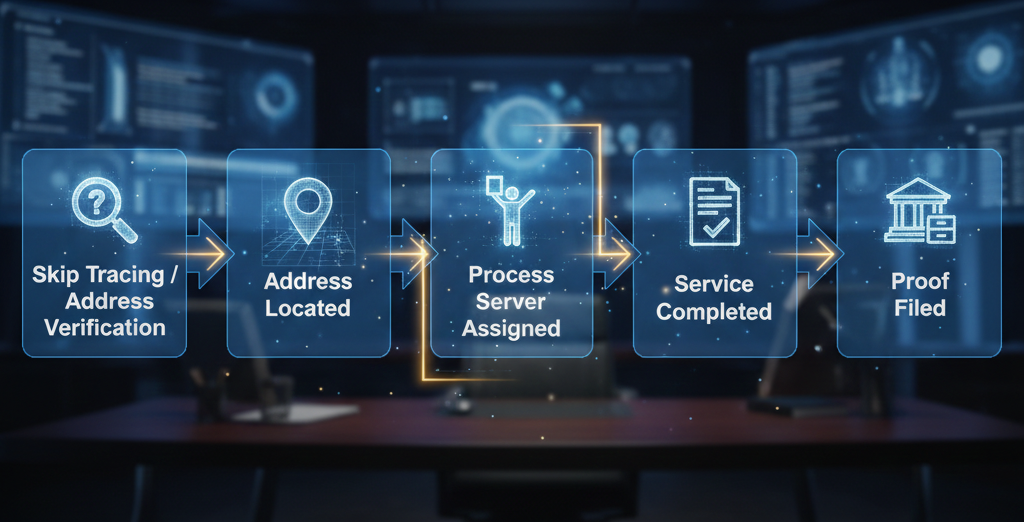
If the subject’s address is outdated or you suspect they’ve moved, consider bundling skip tracing services with your service order.
Ranworks offers a flat $75 skip trace with a 95% success rate. Once the address is confirmed, a server is assigned immediately.
San Diego’s Unique Considerations
Border Proximity
San Diego County’s proximity to the U.S. and Mexico border creates service scenarios that don’t typically come up in Long Beach. Process servers in San Diego may need bilingual communication skills and familiarity with cross-border legal protocols, particularly when parties reside near the border or have ties on both sides.
Military Population
San Diego has a significant military population. Serving documents on active duty service members stationed at bases like Camp Pendleton, MCAS Miramar, or Naval Base San Diego involves the Servicemembers Civil Relief Act (SCRA), which can affect timing and procedure.
The U.S. Department of Justice SCRA page explains these protections in detail.
When You Need More Than Just Service
Many attorneys who serve documents regularly also need court filing support.
Ranworks handles electronic filing for all 58 California counties at $22.95 plus court fees. After completing service and receiving the signed proof of service, the team can immediately e-file it with the court.
Bundling service and filing through one vendor eliminates the back and forth of sending paperwork between different providers.
Frequently Asked Questions
1. Can the same process server operate in both Long Beach and San Diego?
A California-registered process server can legally serve documents anywhere in the state. That said, hiring a server who knows the local court rules, geography, and filing systems in each county matters for getting things done on time. Ranworks operates in both jurisdictions with servers experienced in each county’s specific requirements.
2. Is process serving more expensive in Long Beach than in San Diego?
Generally, yes. Standard service in Long Beach and the wider LA County area tends to run $75 to $150, while San Diego standard service typically falls between $65 and $125. The price difference reflects higher operational costs in LA County, including traffic delays, limited parking, and more complex building access.
3. How long does proof of service filing take in each county?
Los Angeles County generally allows 60 days from the date of service to file proof of service. San Diego County is more restrictive, often requiring filing within 30 days. Electronic filing through each county’s portal speeds up the process, though formatting requirements differ. Attorneys should confirm current deadlines directly with each court, as local rules can change. The California Courts Self-Help Guide provides updated procedural information.
4. Does GPS-tracked service documentation hold up in both courts?
Yes. Both Los Angeles County and San Diego County courts accept GPS-tracked proof of service as part of the affidavit. San Diego courts have placed particular emphasis on photographic evidence and GPS data in recent years. Ranworks includes GPS coordinates, timestamps, and detailed notes on every service attempt, which meet the standards for both counties.
5. What if the person I need to serve has moved from Long Beach to San Diego or vice versa?
This happens regularly. If you have an outdated address, a skip trace can locate the subject’s current location. Once found, your process server coordinates service at the new address. Ranworks offers skip tracing at a flat $75 fee with results typically within one to two weeks. Once the address is confirmed, a server is dispatched right away. The National Association of Professional Process Servers (NAPPS) also provides resources on interstate and intrastate service procedures.
6. Which jurisdiction should I choose if I have flexibility?
If you have the option, San Diego County generally offers faster turnaround times, lower filing fees, and simpler administrative procedures. However, your choice is typically dictated by where the defendant resides or where venue is proper under California law, not by convenience.
Conclusion
The choice between Long Beach and San Diego for process serving isn’t usually yours to make. Venue rules and the defendant’s location decide where papers get served. But understanding how these two Southern California markets differ arms you with better expectations, tighter deadline management, and smarter vendor decisions.
Los Angeles County’s massive court system moves more slowly, costs more, and demands stricter documentation. San Diego County offers faster turnarounds, lower fees, and more flexible procedures. Both require proper licensing, GPS documentation, and servers who understand the local rules thoroughly.
For attorneys handling cases in both counties, working with a single provider who operates across jurisdictions eliminates coordination headaches. One contact, one set of procedures, consistent quality, whether you’re filing in Long Beach or San Diego.
Ranworks has served both markets since 2002 with licensed, GPS-tracked servers who understand county-level differences. When your case depends on proper service completed on time, experience in both jurisdictions matters.
Need service in Long Beach, San Diego, or anywhere else in California? Call 888-636-0293 or email info@ranworks.com. Licensed servers ready to handle your case today.