The Vendor Juggling Act Nobody Talks About
Picture this. You’ve got a judgment. Now you need someone to find the debtor, someone else to serve them, and a third company to handle enforcement once you’re back in front of a judge.
Three vendors. Three intake forms. Three sets of case notes you have to repeat.
If this sounds like your Tuesday, you’re not alone. Most collection attorneys run cases this way because that’s just how it’s always been done. Skip tracers skip trace. Process servers serve. Enforcement specialists enforce. Nobody talks to each other, and you’re stuck relaying information between them.
There’s a better way, and firms are catching on fast.
What Vendor Consolidation Actually Means
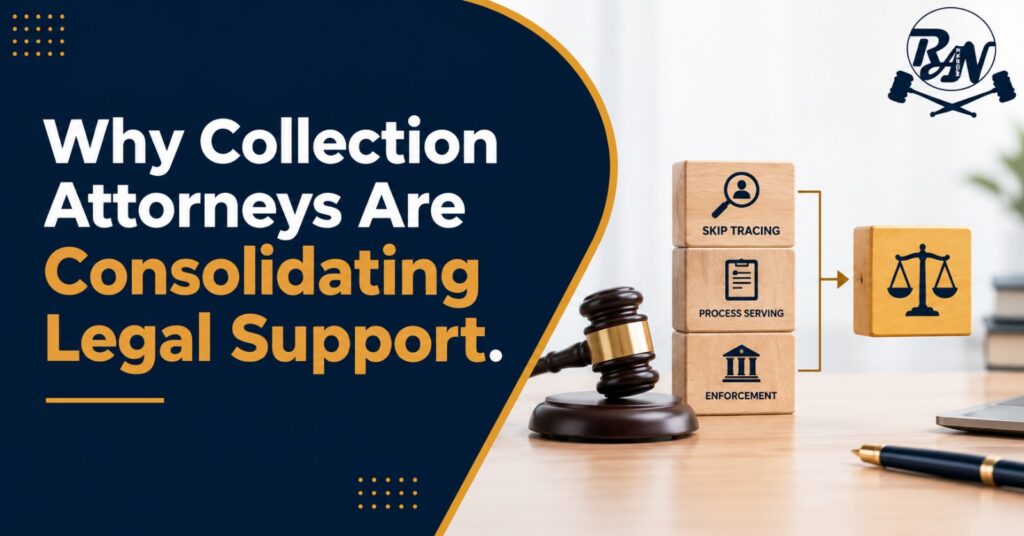
Strip away the buzzword and it’s simple. Legal support vendor consolidation means one company handles the whole chain: locating the debtor, serving the papers, filing with the court, and following through on enforcement.
No handoffs. No re-explaining the case to a new point of contact every time you move to the next step. One vendor owns the file from start to finish.
That’s the whole idea behind single vendor process serving and skip tracing setups. You’re not hiring three companies for three jobs. You’re hiring one that already does all three.
The Real Cost of Running Separate Vendors
Fragmented vendor relationships cost more than most attorneys realize, and not just in dollars. Here’s where it adds up:
- Handoff lag.
The skip tracer finds an address, but that information still has to reach the process server. That’s a day or two of dead time while paperwork moves between companies. - Duplicate intake fees.
Every new vendor means a new setup process. New forms, new account minimums, new “let me get back to you” delays. - Markup stacking.
Each vendor in the chain has their own margin built in. Run a case through four companies and you’re paying four markups instead of one. - Staff hours lost to coordination.
Somebody at your firm spends real time making sure the right vendor has the right information at the right stage. That’s billable time gone to admin work.
Separate vendors also mean separate timelines. When each step waits on a handoff from the last, coordination time stacks up fast, and that’s before you count the duplicate fees and stacked markups eating into what you’re actually paying for.
Where the Cracks Show Up
If you’ve run cases through multiple vendors, you know the pain points. Here’s where things typically break down:
- Stale skip trace data.
A skip tracer finds a current address today. By the time that information reaches a separate process server three days later, the debtor’s already moved again. That’s exactly why skip tracing services work best when they’re connected directly to the service team, not sitting in a separate company’s queue. - Nobody owns the case.
When service fails, who’s responsible? The skip tracer says the address was good. The process server says they tried. You’re stuck figuring out what actually happened. - Repeating yourself constantly.
You explain the case background to the skip tracer, then again to the process server, then again to whoever handles enforcement. Every retelling is a chance for details to get lost.
These aren’t hypothetical problems. They’re the daily reality of disconnected vendors.
Why One Vendor Changes the Math
Consolidating under one vendor fixes the structural problems, not just the symptoms, and it’s one of the fastest ways to reduce legal vendor overhead across a full caseload:
- Single point of accountability.
One company, one team, one person who knows your case from intake to close. No finger pointing between vendors. - Faster turnaround.
When the same team handles skip tracing and service, a located address can move to attempt the same day, no waiting for information to travel between companies. - One invoice, one relationship.
Instead of managing three or four vendor accounts, your staff manages one. Less admin overhead, fewer moving parts to track. - Consistent documentation.
Court compliant proof and GPS tracked attempts formatted the same way across every stage, because it’s coming from one source instead of three.
When one team runs skip tracing and service together, a located address moves into an attempt without sitting in a queue waiting for a separate company to pick it up. That’s the practical payoff: fewer stalled cases and less time spent managing the process instead of working it.
What to Actually Look For in a Consolidated Vendor
Not every vendor claiming to do it all actually does it well. Here’s what separates a real consolidated partner from a company that just added services to a list:
- Verify registration and bonding.
Requirements vary by state, but ask directly whether servers are properly licensed. A vendor operating without proper credentials is a risk that can derail your entire case. - A real skip trace success rate, not a vague promise.
Ask for actual numbers on locating hard-to-find individuals, not a general “we’re good at this.” - Genuine nationwide coverage.
Some companies claim nationwide reach but really just have a phone number and a subcontractor network with no oversight. A genuine national process server network means asking specifically how out-of-state cases get staffed and who’s accountable if something goes wrong. - Enforcement support under the same roof.
Winning the judgment is half the job. Ask whether the vendor handles enforcement directly or hands you off to a separate company once you’ve got your judgment. - Documentation you can actually use in court.
Ask to see a sample affidavit or proof of service before you commit. GPS coordinates, time stamps, and declarations that hold up without a challenge should be standard, not an upsell.
Ranworks was built around this exact model. Skip tracing, process serving, court filing, and judgment enforcement, all under one roof, backed by 23 years of working with the legal community.
How This Plays Out in Practice
Here’s a practical example. Say you’ve got a debtor who’s moved and stopped responding. Under the fragmented model, you’d send the file to a skip tracer, wait for results, send those results to a separate process server, wait again for service attempts, then bring in a third company once you’ve got your judgment to handle enforcement. Each stage means new intake, new waiting, new coordination.
Under a consolidated model, the same team runs skip tracing, gets a current address, and moves straight into service attempts, often within the same window. Once service is complete and you’re back in front of the judge, that same vendor picks up enforcement work like bank levy coordination and wage garnishment setup, because they already know the case.
FAQs
Is vendor consolidation more expensive than using specialists?
Does one vendor handling everything mean lower quality on each piece?
Can a single vendor really cover nationwide work, not just California?
How fast can a consolidated vendor move from skip trace to service?
What are the benefits of using a single vendor for skip tracing, service of process, and enforcement?
How does consolidation improve operational efficiency for collection law firms?
Does consolidating vendors improve skip trace success and judgment enforcement rates?
Stop Managing Vendors. Start Closing Cases.
Every hour spent coordinating between three companies is an hour not spent on the work that matters. If you’re ready to work with one team for skip tracing, service, and enforcement, talk to Ranworks.