
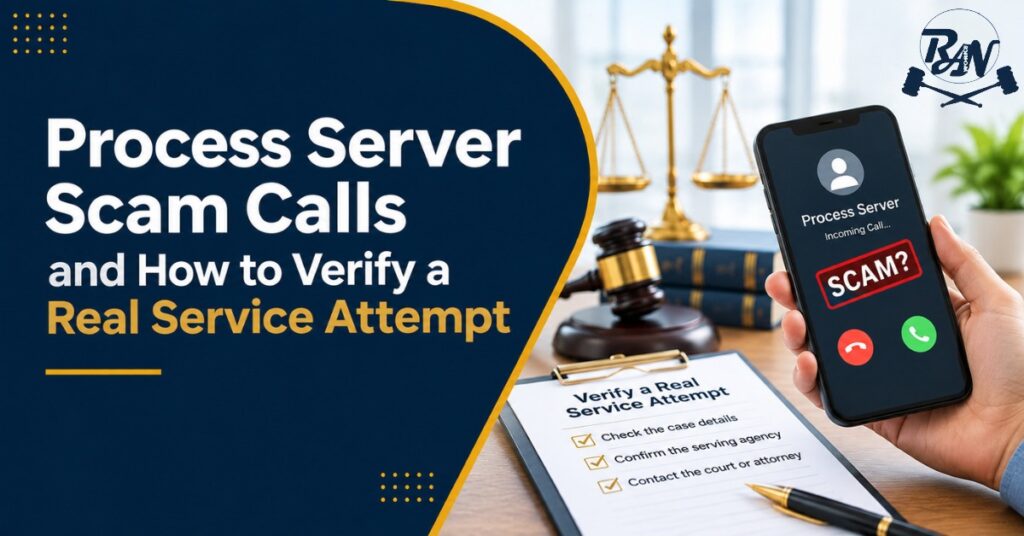
A voicemail says someone is coming to serve legal papers. The caller knows your old address, gives you a reference number, and wants an immediate callback. That information alone does not establish whether the message is legitimate. Process-server impersonators use legal language to collect money and personal information, while real service assignments can also involve attempts to contact the recipient.
The useful question is not simply whether a process server would call. It is whether you can independently verify the caller, the company, and the claimed assignment. You can make those checks without paying an unverified demand, disclosing sensitive information, or assuming that every unexpected legal document is fake.
Why A Convincing Message May Still Be Fraudulent
The Better Business Bureau has documented reports of callers claiming to be process servers and asking recipients to confirm sensitive personal details. A name, former address, or supposed case number can make the message sound credible without proving who is on the phone. Those details may come from public information, old records, or exposed personal data.
A caller may also use the name of a real business. Finding that business online proves that it exists; it does not establish that the caller works there. Treat the caller’s identity and the organization’s identity as two separate facts to verify.
Payment To Stop Delivery Is A Major Warning Sign
A demand for immediate payment to “cancel service,” erase a supposed warrant, or prevent arrest should trigger independent verification. The FTC warns that court-impersonation scams use threats and hard-to-recover payment methods, including gift cards and cryptocurrency, to pressure recipients into acting quickly.
A process server delivering civil papers does not decide whether a lawsuit is dismissed. A legitimate settlement, if available, involves the appropriate parties and documentation. Do not assume a caller can end a case because they claim to control whether papers reach you.
Personal Knowledge Is Not Proof Of Authority
Someone may read out part of your Social Security number or mention a relative to encourage you to supply the rest. Do not fill in missing details for an unverified caller. Bank credentials, authentication codes, payment-card details, and identity documents should not be handed over because a voice on the phone sounds official.
An old address also does not prove fraud by itself. A legitimate assignment can begin with outdated information. The safer test is whether the claimed organization confirms the contact through a channel you independently obtain.
How To Check The Caller Without Relying On Their Instructions
Write Down What They Claim
Ask for the caller’s name, the company or agency, and an office contact. If they say a case has been filed, note the court name, parties, and case number they provide. Preserve the voicemail or message so you do not have to reconstruct it later.
Some legitimate callers may limit what they disclose before confirming they have reached the right person. That can leave questions unanswered, but it does not require you to disclose sensitive information immediately. End the call if necessary and verify the organization separately.
Contact The Organization Through An Independently Found Number
Find the company’s official website or the agency’s official directory yourself. Call the published office number and ask whether the person and reference belong to that organization. Do not rely only on a link, QR code, caller-ID display, or callback number supplied in the suspicious message.
If the message specifically claims to come from Ranworks, its San Diego Process Server page provides an established service-page reference for checking company details. Ask the independently reached office to verify the claimed connection. A caller repeating information from that page still has to be verified.
Check A Claimed Case With The Appropriate Court
Use the court’s official website or clerk’s office to investigate a specific case claim. Match the court, case number, and parties. A random number described as a “file number” may be an internal agency reference rather than a court case number.
One unsuccessful online search does not prove that no case exists. You may be searching the wrong court, the filing may not yet appear in the public system, or access may be restricted. If a specific court is named, its clerk can explain how to search the available records. If actual papers have arrived, have their significance reviewed promptly instead of relying only on a search result.
What Does Not Prove That A Process Server Is Fake
A private process server does not have to look like a police officer. Registration, licensing, appointment, and identification requirements vary by jurisdiction. There is no single national process-server badge that resolves every identity question.
An attempt at a workplace, an unfamiliar company name, or a call asking to arrange contact is not automatically fraudulent either. The legal requirements for service depend on the papers, the court, and the circumstances. Evaluate the identity and conduct involved rather than relying on a rule such as “real servers never contact anyone beforehand.”
Refusing A Signature Is Not A Reliable Way To Avoid Service
Do not assume service can occur only if you sign a receipt. The rules for a particular method may not require your agreement or signature. Equally, a caller’s assertion that you have already been served does not establish that legally sufficient service occurred. That is a procedural question to review from the documents and facts.
Verification should help you distinguish a real assignment from impersonation. It should not become a reason to destroy papers, miss a response deadline, or confront someone attempting delivery.
If You Already Shared Information Or Sent Money
Save the messages, phone numbers, payment details, and any files or links involved. Contact your bank or payment provider promptly if money or account information was disclosed. If you shared passwords, secure the affected accounts; if identity information was exposed, follow the relevant identity-theft recovery steps.
The FTC’s guidance on what to do after a scam explains actions for different payment methods and types of information exposure. Follow the advice that matches what happened. Do not pay someone who contacts you promising guaranteed recovery of the money.
If The Contact Is Legitimate
Once the organization confirms the assignment, address the papers and any response requirement on their merits. A process server can document delivery; the server does not determine how you should defend the case. Seek legal help where needed, especially if the deadline is unclear or you believe the wrong person has been named.
If you hired a server and a recipient reports a suspicious call, give your provider the details through your established contact channel. Confirm whether the call was theirs before issuing further instructions or paying an unexpected invoice. Clients of Ranworks can contact the company directly to check claimed communications and discuss an existing assignment.
